Tuesday, August 14, 2012

I'tikaf and Laylat Al - Qadr

 بسم الله الرحمان الرحيم
In the Name of Allah,
the Most Gracious, the Most Merciful.
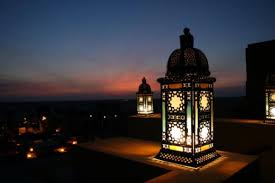


Spiritual Retreat (I'tikaf)
 
It is sunnah at any time, to make spiritual retreat
(I'tikaf) in the Masjid.

Laylat Al- Qadr

I'tikaf is especially recommended in Ramadhan,
particularly in the last ten days of it, seeking
Laylat al-Qadr (''the Night of the Divine Decree'')
( which is as Allah Most High says,

لَيْلَةُ القَدْرِ خَيْرٌ مِّنْ أَلْفِ شَهْرٍ
''better than a thousand months''
                                  (97:3)

meaning that spiritual works therein are better
than works of a thousand months lacking Laylat
al-Qadr. Indicating its excellence, Nabi صلى الله عليه وسلم
said, ''He who prays on Laylat al-Qadr in faith
and expectation of its reward will be forgiven
his previous sins''

Laylat al-Qadr could be on any night of Ramadhan
( or any other month of the year, according to some).
It probably occurs within the last ten nights, more
likely on the odd numbered ones ( remembering that
the night of an Islamic date comes before the day of
that date ), the twenty-first and twenty-third of which
are the likeliest ( though most scholars hold it to be the
twenty-seventh. On Laylat al-Qadr it is recommended
to frequently repeat,

 اَللَّهُمَّ اِنَّكَ عَفُوٌّ تُحِبُّ الْعَفْوَ فَاعْفُ عَنِّيْ
 ''O Allah, You are oft-relenting
and love to forgive, so forgive me.''


How to preform Spiritual Retreat
 
At minimum, spiritual retreat (i'tikaf ) consists of :

(a)  staying, with the intention of i'tkaf , for more than
the least amount of time that can be considered repose
( i.e. a moment ) ;

(b)  while being Muslim, sane, conscious, and free of
major ritual impurity ( i.e. of menstruation, postnatal
bleeding, and major impurity (janaba));

(c)  in a masjid, even when this stay is no more than
entering the periphery and  then leaving by the same
entering (taraddud), though to merely pass through is
insufficient.

Optimally, the i'tikaf should be accompanied by fasting,
take place in the Friday congregational Masjid (because
of the size of the group prayer therein, and so as not to
have to leave to attend the Friday prayer), and be no less
than a day.

* A person should only speak good, read the Qur'an and
Zikr and learn Islamic knowledge and keep fast.

* It is Makrooh to cupblood - but if Masjid will become
dirty it will be haraam.

* It is Makrooh to buy and sell abundantly, stitching  or
other things.

* It is not permissible for a woman to keep i'tikaf without
her husband's permission.

* A Mu'thakif ( the one who is making i'tikaf ) can renew
his intention again after he breaks it.

* Kissing and touching will not invalidate the i'tikaf.

Things that which break the i'tikaf

1)  intercourse ;

2)  coming out of the Masjid intentionally ;

note : if a person goes out of the Masjid with an excuse
and returns back, his i'tikaf is still valid, but if he come
out without an excuse it is invalid, but he can renew the
intention and keep the i'tikaf again.

3)  intoxication ;

4)  need for ghusal ( to have a fardh bath ).

 Extracts from
Ahmad ibn Naqib al-Misri's
Reliance of the Traveller 
Tran.. by Nuh Ha Mim Keller


Sunday, August 12, 2012

Makkah Taraweeh 2012 Night -23


A beautiful view of Makkah, 23rd night of ramadan Taraweeh 2012
with EnglishTranslation.

Click here for the Duas in the month of Ramadhan 4


Friday, August 10, 2012

Ramadan, a gift for Muslims - Nouman Ali Khan


MashaAllah a very good lecture by Br. Nouman Ali Khan - Ramadhan, A gift
for the Muslims.


Thursday, August 9, 2012

Makkah Taraweeh 2012 Night -19


 MashaAllah, Taraweeh in the Haram, conducted  by  Sheikh Juhany and
Sheikh Abdul Rahman al Sudias. (with English translation).

Monday, August 6, 2012

Sunnah Acts of Ramadhan


بسم الله الرحمان الرحيم
In the Name of Allah,
the Most Gracious, the Most Merciful


SUNNAH ACTS OF RAMADAN

1} MAKE SAHAR
Ibn Umar رضى الله عنهما relates that Rasool صلى الله عليه وسلم said: “ Verily Allah and
His Malaa’ikah (Angels) send mercy upon those who eat sahar”.      ( Tabarani )

Anasرضى الله عنه  relates that Nabi صلى الله عليه وسلم  said : “ Make sahar , for surely
in sahar is barakah (blessing)”.                                       
                                                                                    (Bukhari and Muslim)

The reasons for the barakah at this time:
1)      The sunnah is followed
2)      Through sahar we distinguish ourselves from the Ahle-al- Kitaab ( the Jews
and the Christians)  .
3)      It provides strength for worship
4)      It aids in preventing bad temper as a result of hunger
5)      Sahoor is the time when duaas are accepted
6)      At this time of sahoor one gets the opportunity to make the Zikr
( remembrance ) of Allah.
 
And in general it keeps the fasting person active , strong and happy for the rest of 
the day.

2} DELAYING SAHAR
   It has been narrated that Rasool صلى الله عليه وسلم  said : “ people will always be
   enjoying khair (goodness) as long as they hasten to break the fast and delay sahar.
                                                                                                                 (Ahmad)

3} TO TAKE A GUSUL (FARDH BATH ) BEFORE FAJR.

4} TO HASTEN IFTAR
 Abu Hurairahرضى الله عنه narrates that Rasool صلى الله عليه وسلم said: “Allah Ta’ala says, 
''The most beloved slave to me is the one who hastens to break his fast.” ( Tirmizi )

It has also been reported from him, that Nabi صلى الله عليه وسلم said: “ This religion will
continue to be victorious as long as people hasten the breaking of the fast.”
                                                                                                     (Abu Dawood)

5}  Rasool  صلى الله عليه وسلم used to make Iftaar before he performed salah on
Ruthb (fresh dates).
Thus if it was not available on Tamar (dry dates) , thus if that also was not available,
he used to take a few sips of water, because surely it is pure.
                                                                            (Tirmizi and Abu Dawood)

6} MAKING DUA AT THE TIME OF IFTAAR.
 Nabi صلى الله عليه وسلم has been reported to have said: “Surely for the fasting person,
at the time he breaks his fast, is a duaa which will not be rejected”. (Ibn majah)

It is also sunnah to read the masnoon duaas at the time of iftaar:

ذَهَبَ الظّمأ وَابْتَلَّتِ الْعُرُوقُ و ثَبَتَ الأَجْر إنْ شاء اللهُ
Thirst has vanished , the veins have been moistened and Allah willing , the reward 
( for the fast ) is certainly fixed.

And It is also recommended to read the following duaa read by Ibn Umarرضى الله عنهما
اللهّمُ بِرَحْمَتِكَ الَّتى وَسِعَتْ كُلَّ شيى اغْفِرْلِى


7} HELPING ANOTHER TO MAKE IFTAAR 
Nabi صلى الله عليه وسلم said : “Whosoever gives (something for) a fasting person to break
his fast, he will get a reward similar to his, nothing will be reduced from his reward (the
one who fasts) in the least.” Thereupon some of the sahabah asked: “  Oh Messenger 
of Allah, not all of us have the means of providing for the fasting person!!”
Nabi صلى الله عليه وسلم replied:  “Allah Ta’ala gives the same reward to the one who
gives the fasting person even a date to break his fast, or a sip of water or milk.”                 
                                                                                             (Ibn khuzaimah)
8} TO INCREASE IN أَعْمالُ صَالِحَة  RIGHTEOUS DEEDS                         
         
     a) Spending generously on family and friends and giving lots of sadaqah
          It is reported in a riwayah in Bukhari, that Nabi صلى الله عليه وسلم was the most
          generous of all men and his generousity increased in Ramadan.

  It was also reported by Anas رضى الله عنه that it was asked from Rasool صلى الله عليه وسلم  :
  “ Which sadaqah  is more virtuous?” Rasool ( sal) said, “ Sadaqah in the month
   of Ramadan.

     b) Reciting a lot of Quran.
     Ramadan is the month in which the Quran was first revealed. It comes in a hadith:
 
  Abdullah ibn Ammarرضى الله عنهما  states that Nabi صلى الله عليه وسلم said, “ The fast
  and the Quran will both plead on behalf of the bondsman who keeps fast in the day
  and recites or listens attentively to the recitation of the Quran at night standing in the
  presence of  Allah. The fast will say,O my Lord! I had held him back from food,
  drink and sexual gratification, accept my intercession for him today and treat him
  with mercy and forgiveness.The Quran will say, “ I had held him back from taking
  rest and sleep at night, O my Lord accept my intercession for him today and treat 
  him with mercy and forgiveness''. The intercession of both the fast and the Quran
  will be accepted and he will be treated with exceptional kindness.                                                                                                                                          (Baihaqi)

     c) Performing lots of Nafl Salahs In general throughout the day like, Dhuha,
     Ishraaq…etc.  To also perform the Taraweeh at night.
    
      It comes in a hadeeth in Baihaqi:
      No Mumin servant( of Allah ) performs salah during its nights (in Ramadan),
      but Allah will record for him one thousand five hundred hasanah for every
      sajadah that he makes. And Allah will build a home for him in Jannah made
      out of red ruby.  

     d) To make I’tikaf in the masjid for men and at home for women especially
     in the last ten nights of Ramadhan.

     e) Searching for  Laylathul Qadr
     To read the following duaa, because it has come in a hadeeth
    Aa’isha رضى الله عنها is reported to have said that she asked Nabi صلى الله عليه وسلم 
   “ O Messenger of Allah, should I find myself  in Laylathul Qadr, What shall I pray?
   Nabi صلى الله عليه وسلم replied:

اللّهُمّ إنّكَ عَفوٌّ تُحِبّ العفْوَ فَاعْفُ عَنّىِ  

  O Allah Thou art the one who grants pardon for sins, Thou lovest to pardon , 
  so pardon me.

      f) To make I’badah on the eve of Eid ( night before Eid)
      Abu umamahرضى الله عنه relates from Rasool صلى الله عليه وسلم , “ a person who 
      stays awake on the two nights of Eid with the expectation of reward, then his 
      heart will not die on the day when people’s  hearts will die (Day of Qiyamah).  
                                                                                                  (Ibn majah) 


Sunday, July 15, 2012

Value of Knowledge


Value of Knowledge - Priceless Advice for Students & their Parents 
by Shaykh Saleem Nawab. 

Monday, July 9, 2012

A Discussion on the Imortance of Ladies Work

بسم الله الرحمان الرحيم
In the Name of Allah,
the Most Gracious, the Most Merciful.


A Discussion (Muthakara) on the Importance
of Ladies Work

This work is not something new. We have become distant from the work
because of not doing the effort of dawah. Once we have recited this Kalimah,
this effort of dawat becomes necessary on every male and female. To invite
people to Deen (Religion) , i.e. to call others to this Kalimah. As soon as Sahaba
and Sahabiyat recited the Kalimah, they started with the effort of dawah. Sahabiyat,
when they recited the Kalimah, they started the effort of dawah by which Allah
Ta'ala honoured them greatly.

Khadeejaرضى الله عنها was the first person to accept Islam - even before any male.
When the first wahi was revealed to Rasulullahصلى الله عليه وسلم, he frightened.
Khadeejaرضى الله عنها consoled him and took him to Warqa bin Naufal who was
her cousin. This was the first ghusht of Khadeejaرضى الله عنها through which
Sumayaرضى الله عنها  accepted Islam.

Sacrifices of Sahabiyat

* Khansaرضى الله عنها  was a great Arab poetess. She had four sons. One day before
the battle, she advised them to sacrifice their lives for Deen. Next day all four sons
were martyred and she was happy, because on the Day of Judgement, I will enter into
Jannah with my four (Shaheed) sons.

* Sumayaرضى الله عنها underwent great hardships for the sake of Deen. Allah also
bestowed the first honour of martyrdom on a lady, i.e. Sumayaرضى الله عنها .Her
husband,Yasirرضى الله عنه and her son Ammarرضى الله عنه also faced hardships
though out their lives. 


* One Sahabiya  presented her breastfeeding baby to Rasulullahصلى الله عليه وسلم to
be used in the path of Allah. Rasulullahصلى الله عليه وسلم asked her of what use will
this child be. She repiled : ''Oh Rasulullahصلى الله عليه وسلم , use him as a shield so
that at least one person's life can be saved.''

* Umme Shareekرضى الله عنها faced a lot of hardships for Deen. One day the kafirs
decided to send her to her parents  home away from makkah. Two kafirs took her
without give anything to eat or drink. On the way she felt  thirsty. She laid down and
was near to death. Allah Ta'ala sent water for her from heavens. She drank it. On
seeing this, kafirs became Muslims.  

* One child was crying in one of the streets of Madina because ''everyone else's
father becomes shaheed in the path of Allah while my father is dying while lying
on his bed.

* In the way, the sahabah women made great sacrifices in spreading Deen. Among
the four Khulafa-e-Rashideen, two ( Umar and Usmanرضى الله عنهم ) accepted Islam
due to their women relatives (Sahabiyat) of their family.

* The first person who spent most of wealth for Islam is a woman, 'Khadeeja رضى الله عنها.

Allah Ta'ala says in the Qur'aan :  
The believers, men and women, are Auliya' (helpers, supporters, friends, 
protectors) of one another; they enjoin (on the people) Al- Ma'ruf and 
forbid (people) from Al- Munkar;  9 : 71

i.e. the men and women are both responsible for one another. This work of dawah is
the responsibility of both  men and women because both genders are the Ummat of
Rasulullahصلى الله عليه وسلم . If the men alone does the effort of Deen and the wife and
children are engrossed in dunyaa, then the husband will be pulling the rope towards
Deen and the on the other side the wife and children will be pulling towards dunyaa.
In this manner it will be difficult for Deen to enter the home. Until both husband and
wife do not practise Deen, it will be impossible for Deen to enter into their children
and  into their home. When the husband does the work of Deen alone, then Deen
comes up to the doorstep only. When the wife also assists the husband in the effort
of Deen, then Deen will not only enter into their home 100% but also in all their children.


Saturday, June 30, 2012

Financial issues between the husband and wife:

بسم الله الرحمان الرحيم
In the Name of Allah,
the Most Gracious, the Most Merciful.


 Financial issues between the husband and wife:
Before we discuss financial issues between the husband and wife, let us discuss:
1)          Financial rights of women in Islam.
Every woman, whether she is a minor or an adult, has a right of ownership in financial and property issues. This is clearly understood from the following points:
a) If a son passes away and he is survived by his, his mother will inherit 1/3 or 1\6 of his estate depending on circumstances and the Shariah Laws of inheritance and succession.
b) If a father passes away and he is survived by a daughter, the daughter will inherit 1\2 or 1\3 of the estate depending on the circumstances.
c) If a husband passes away, the wife will inherit 1\4 or 1\8 of his estate depending on the circumstances.
d) Even if the grandchild passes away, the grandmother will inherit from the grandchild’s estate.
e) If a brother passes away, the uterine sister will inherit from his estate.  However, the blood sister and consanguine sister will inherit according to the over-arching principles of inheritance and succession.
In all these cases, the mother, the daughter, the wife, the grandmother and sisters will inherit according to the Shariah Laws of Inheritance and Succession.
The point in focus is Shariah itself has appointed a share of inheritance for woman. That clearly indicates a woman’s right of ownership in financial and property issues.
2) Dowry-mahr:
When a woman gets married, the husband has to give his spouse dowry. Allah says:
 أَنْ تَبْتَغُوا بِأَمْوَالِكُمْ مُحْصِنِينَ غَيْرَ مُسَافِحِينَ فَمَا اسْتَمْتَعْتُمْ بِهِ مِنْهُنَّ فَآتُوهُنَّ أُجُورَهُنَّ فَرِيضَةً (سورة النساء آية 24)
“[provided] that you seek them [in marriage] with [gifts from] your property, desiring chastity.”

After enumerating which women are Haram in marrying, Allah says other women are permissible and seek from them with your wealth. That is, give them mahr.  That is the sole and independent right of a woman.  
When there is a marital dispute and the wife wants to terminate the marriage, she can offer to return the Mahr which the husband gave her in exchange of divorce. This point again illustrates a woman’s right of ownership of financial and property issues.
3) Compensation:
If anyone breaks or damages a woman’s item, she has a right to claim compensation for the broken or damaged item.
In Tirmidhi Sharief, an incident is mentioned about how Hazrat Aisha(radi Allahu anha)  broke a utensil of another wife of Rasulullah.
Before the demise of Rasulullah, he had nine wives.  He used to spend one night by each wife.  
It was Hazrat Aisha’s turn to have Rasulullah Sallallāhu Alayhi Wasallam.Another wife sent a utensil of food for Rasulullah Sallallāhu Alayhi Wasallam.Hazrat Aisha (radi Allahu anha) was overcome by possessiveness. She hit the hand of the woman that brought the food. That lead to the utensil falling down and breaking.Rasulullah Sallallāhu Alayhi Wasallam himself bent down and picked up the broken pieces and commented غارت أمكم your mother-referring to Aisha(radi Allahu anha)  has been overcome by possessiveness. In order to maintain justice in property rights of his wife, Rasulullah Sallallāhu Alayhi Wasallam took a similar container from the house of Aisha(radi Allahu anha) and returned it to the other wife.
It is very clear from these points that a woman has a right of ownership by her guardian.  However, if a woman is an adult, she has a complete independent right to administer her wealth.  If she is a minor, that is she has not attained puberty, her wealth will be administered by her father or whoever is her guardian.
Financial issues between husband and wife:
In this we are not discussing the wife’s rights of maintenance. According to Shariah, the husband has to maintain the wife whether she has wealth or not. We will be discussing the following points:
·             Does the husband have a right to know the wife’s wealth.
·             Does she have to seek her husband’s permission in administrating her financial issues.
The relationship between the husband and wife is unique. It is a legal bond submerged with intense love. The implications of a legal issue are different from the implications of a love issue.
In legal issues there are rules and regulations that govern the issues. In love, rules are broken.
According to Shariah if a wife owns wealth, she is totally independent in her wealth. She can administer her financial issues as she wants. The husband has no right over her financial issues. He should respect the right Shariah has granted to her. She can buy, sell, loan, and deal in her wealth in such a way that it does not infringe the rights of the husband.
When the husband regulates his financial issues, and he does not tell his wife about his financial issues, he expects her to respect his right. If she questions him on his wealth, he does not have to divulge information to her. If he buys or sells or does anything, he can conceal all that from his wife. The wife should respect that. Likewise if she conceals her financial issues from him, he too should respect that.
Flexibility:
Money can become a bone of contention in a marriage. A husband and wife should not live like adversaries in a boxing ring. All the time fighting on financial issues.
In marriage, often laws are broken to maintain love and harmony.
On one side we have the example of Hazrat Sara the wife of Ebrahim(a.s).She owned Hazrat Hajra, but she gave Hajra as a gift to Ebrahim(a.s).
On the other hand we have the wife of Rasulullah Sallallāhu Alayhi Wasallam Hazrat Khadija (r.a). She was very rich and wealthy. She gave her wealth to Rasulullah Sallallāhu Alayhi Wasallam. Allah says:
وَوَجَدَكَ عَائِلًا فَأَغْنَى (سورة الضحى آية 8)
And He found you poor and made [you] financially rich.
This was through the wealth of Hazrat Khadija (r.a).
It is because of this flexibility between the spouses, it is not permissible for the husband to give zakat to his wife and vice versa. The wife cannot give her zakat to her husband. It is very possible, she herself will give her zakat to her husband, and she will end up using the same money she gave her husband.
Community of property:
According to Shariah, the concept of community of property, where the husband and wife owns 50% of each other’s wealth by virtue of marriage is not Shariah Compliant.  The husband and wife will have to enter into a separate partnership contract to be partners in wealth. 
Taken from Darul Iftaa
 

Wednesday, June 20, 2012

What do Women Get in Paradise (Jannah) by Mufti Abdur Rahman ibn Yusuf


 A lecture by Mufti Abdur Rahman ibn Yusuf discussing in detail what reward
 awaits women in Paradise. Do they receive the same type of reward or is their
 reward unique? Are there hurs for women in Paradise? It also discusses the state
 of women who had been married in the world, those whose husbands died first
 and those who remarried. An important lecture that clarifies these questions and
 many more in the light of the Qur'an and Sunnah in a clear and eloquent style.


To listen to more lectures by Mufti Abdur Rahman ibn Yusuf please
visit www.zamzamacademy.com