Teaching Islam to our Children - Nouman Ali Khan
Friday, July 5, 2013

Tuesday, July 2, 2013
Friday, June 28, 2013
The Idol in the Mirror
بسم الله الرحمان الرحيم
In the Name of Allah,
the Most Gracious, the Most Merciful.
MashaAllah a very interesting article I read here
Even though the author had written it in the form of a fiction,
it really made me reflect on it, how true it is......

By Humaira Khan
A Short Story
She hated him when they had disagreements. Adil was a great husband and father—most of the time. He was caring and loving and he helped her with her household chores. He loved the children—he fed them, woke up in the middle of the night to help her put the little one to sleep, and changed their diapers. But sometimes he could be extremely unreasonable and would lose his temper at the slightest provocation.
Like tonight.
Earlier in the evening, she had been running late to get dinner ready because the children were not giving her a break; they were all irritable. She wished Adil would help watch them so that she could get the cooking done, but he was on the phone.
“Okay, enough out of you two!” she said out loud, hoping Adil would hear her.
But five whole minutes passed and he didn’t come.
She found herself getting more and more frustrated. Why wasn’t he coming? How was she supposed to handle two crying children AND cook the food?!
A few minutes later, Adil strolled into the living room.
“That was Abdullah. He is in the area and wanted to know if I could go to the masjid with him for Maghrib1 and play cricket afterwards. What do you think?”
“Whatever you want,” said Aisha, as she tried to clean up the mess in the living room. The children had quieted down and were busy eating sandwiches.
“Are you sure?” Adil didn’t seem to notice that she didn’t exactly approve of the plan.
“Yeah,” she said, carefully avoiding eye contact with him.
“Okay, but call me if you need anything.”
“What about dinner?”
“I’ll eat when I come back insha’Allah2 !”
His smile was dazzling. Countless times, she had gazed at him as he smiled and thought how lucky she was to have a man like him. But this was not one of those moments.
His phone started ringing. It was Abdullah again.
“You sure you will be okay?” Adil asked Aisha.
She nodded.
He hugged them all and left with Abdullah.
Three hours later, Aisha was exhausted. The children had taken forever to sleep and she hadn’t had a break since morning. When Adil came home, she didn’t even feel like talking to him. When he tried to get her to tell him why she was upset, her reply was short and curt. Adil was furious! Why had she let him go with Abdullah in the first place if she didn’t want him to?!
A huge argument followed and Adil stormed out of the room! Aisha was seething in anger. How she hated him!
She sat rocking furiously back and forth on the glider, angry thoughts racing through her head.
How she ended up thinking of Mariam just then, she didn’t know. But her mind went back to a conversation with her best friend almost twenty years ago.
She had been sitting alone on the bench in the college courtyard, brooding, when she was startled by someone’s hand on her shoulder.
She swung around only to come face to face with Mariam. In her, Aisha had found the only person who understood her.
Mariam sat down next to her.
“Why are you sitting all alone over here, Aisha?”
“Nothing. Same old story.”
“Oh. What happened?”
“Just this girl I thought I was getting along really well with. She said something I didn’t like.”
Mariam waited for her to continue. She knew better than to interrupt when Aisha was agitated.
“I don’t understand why these things happen to me, Mariam! I mean, what did I ever do to all these people that they feel they need to be mean to me!”
“Well, what did that girl say to you?”
“I don’t remember exactly, but something about how she didn’t know I was out of town last week. She said she didn’t realize I wasn’t around because she never sees me outside of the classroom or at any events here anyway, and that it was only when someone else mentioned that I had gone to California to visit my sick aunt, that she found out I was away!”
“Poor choice of words, I agree, but—”
Aisha interrupted her: “Well, who is she to go around drawing conclusions about someone she doesn’t know! What does she know about what events I like or don’t like to attend! I wish I could think of the right thing to say when it’s needed and not later when the moment’s gone!”
“So what would you have liked to say to her?”
“I would have told her the truth, of course! That I attend all the events or parties that I am invited to. But that I cannot be there at events I haven’t received an invitation for.”
She was biting her lip.
“But why is that so important for you to clarify?” Mariam asked gently.
Aisha looked up. What was Mariam saying? Her own confused look met Mariam’s steady gaze.
“Why shouldn’t it be important?” she said, almost defensively.
“What I am asking is why do you think correcting someone’s opinion about you is so important? Do you think you can tell me in concrete terms why some acquaintance’s incorrect opinion of you is bothering you so much?”
Aisha was silent. Mariam’s question was important. Why WAS it bothering her so much? And why was she so bent on correcting it?
“I guess I want people to not misunderstand me and not make a monster out of me when I’m really not one?” Her answer wasn’t making much sense to herself either. When stated plainly, it really didn’t seem like it had been that big of an issue to begin with!
“Exactly!” Mariam’s response was a second too fast.
Aisha smiled inadvertently. “You know something I don’t, right?” she said, somewhat relieved to find herself smiling in this situation.
“How many times did you just use the words “I” or “me” in that last sentence?”
“What does that have to do with anything?!” She wished Mariam wouldn’t speak in riddles!
“Does someone else’s bad opinion of you make you a bad person? Obviously not, right? So why should that opinion be so important that it assumes center stage in your life? People have the option to find out the truth, be polite, not jump to conclusions about others but they also have the option not to. What they choose defines who THEY are, not who YOU are.”
Aisha had a look of admiration on her face. Mariam truly had the gift of eloquence!
Mariam continued: “But even that’s not what I am trying to point out to you. Sometimes we have problems not because others are judging us or misunderstanding us but because we are so focused on ourselves that everything else is diminutive in comparison. We then become more important to ourselves than even Allah subhanahu wa ta`ala (exalted is He) and that’s where our problems begin.
“So, for example, when someone gives us an odd look, we want to know why and spend hours in agony trying to find out what’s wrong. Or when somebody disagrees with us, we find ourselves infuriated. Or when our mom tells us to do something when we are busy, we get frustrated because we, our work, our time, is more important than everything else! And when we are more important to ourselves than anybody else, our relationships are affected too, by the way we respond to what others say and do. What they say or do is not judged by its own merit, but in terms of how they say or do those things TO US! Does that make sense?”
“Yeah,” Aisha said slowly. She was staring past Mariam at some distant point, her brow wrinkled as she let that explanation sink in. Mariam was right. Aisha realized she did judge everything and everyone in terms of how those things or those people affected her. But wasn’t that how everyone else saw things too? What other point-of-view could she see things from, if not her own?
Mariam said: “I struggle with this self-centeredness, too, you know. All the time! I have to constantly remind myself!”
It seemed incredulous to Aisha that Mariam, whose understanding of the issue seemed so clear, could be struggling with it as she said.
But Mariam was speaking again: “Yes, that’s right. I struggle with this all the time! Every time I find myself getting frustrated, I know my focus is me! I know then that I need to stop making myself the center of the universe!”
“But I don’t understand! If you don’t let yourself judge things based on how they affect you, wouldn’t you be leaving yourself vulnerable to oppression?” Aisha finally managed to convey her confusion in concrete terms.
“Actually, if you are not so focused on yourself, you’ll be able to see things more clearly and deal with them more sensibly than if all you can see is you!”
Mariam’s explanation made complete sense.
It had been twenty years since she had had that conversation yet she hadn’t forgotten it. Like Mariam, she too found herself struggling to live it. Every time she found herself getting angry at her children, or mad at her husband, or frustrated with people in general, she realized that it was time for her to remind herself to stop focusing only on herself.
If her son wanted to go the bathroom one more time or her daughter wanted her to play with her just as she was trying to get dinner ready, was it their fault? If she was getting frustrated, it was because she was thinking, “Why can’t they let me do what I want to do at this time?!”
If her husband went to sleep early one day in a month because he had had a tiring day at work, she would be angry with him. “Is my day not tiring?” she would think.
If her mother-in-law didn’t appreciate her, she would be depressed and unhappy. “Why doesn’t she see my good qualities?” would be the thought in her head.
Of course this wasn’t just the case when things weren’t going well. She realized that she was happy when people praised her or spoke nicely to her. It didn’t matter whether they were right or wrong about her then; the only thing that mattered was their approval.
Mariam had been right. It was when her “self” assumed central importance in her own life, over and above everything and everyone else, that her problems really began.
Aisha took a deep breath. She realized that the issue could have been better resolved had her entire focus not been on herself alone, even if her husband’s had been on himself. If only she had let it go at that moment and not made it a matter of ego, saying, “How dare he do / say this to me!”
If she had not lost her temper then, he would have felt bad at his own conduct. And when things had calmed down, she would have had every opportunity to let him know how she felt when he had raised his voice at her. Who could he have blamed then, except himself?
Slowly, she rose from her chair. She knew what she had to do but she hesitated. Apologizing was not about lowering oneself, as she had once thought, but about admitting one’s mistake. And she had made a mistake.
It was time to repair her relationships.
She walked to the door, hesitated again, but then bravely left her room to find Adil. If he had been unreasonable, she had been unreasonable too.
Somebody needed to take that first step to put an end to such situations. And the first to do so would earn the most reward, she thought.
Besides, their relationship was worth saving. Little issues like this could assume larger-than-life proportions if not dealt with sensibly, and she didn’t want such things to stand between her and Adil.
She was sure he was sitting in the living room staring into space. She paused in the hallway as she caught sight of him doing just that. A smile escaped her. He was a good man. Sometimes she couldn’t understand how she could be so upset with him.
She glanced at the mirror hanging on the wall next to her but a thought struck her as she looked. For the next few seconds, she stared at her own reflection, thinking that this was the person who was at the center of her little universe. It didn’t seem right.
She looked towards Adil again and was surprised to find him looking at her. As she walked towards him, he stood up. Leading her by the hand, he made her sit next to him on the sofa.
Before she could say anything though, he looked straight at her and said, “I’m sorry, Aisha. I should not have spoken to you like that.”
“No, I’m sorry.” Aisha’s eyes were full of tears.
She had to explain to him how she felt and he was ready to listen, all night if he had to.
In the Name of Allah,
the Most Gracious, the Most Merciful.
MashaAllah a very interesting article I read here
Even though the author had written it in the form of a fiction,
it really made me reflect on it, how true it is......
By Humaira Khan
A Short Story
She hated him when they had disagreements. Adil was a great husband and father—most of the time. He was caring and loving and he helped her with her household chores. He loved the children—he fed them, woke up in the middle of the night to help her put the little one to sleep, and changed their diapers. But sometimes he could be extremely unreasonable and would lose his temper at the slightest provocation.
Like tonight.
Earlier in the evening, she had been running late to get dinner ready because the children were not giving her a break; they were all irritable. She wished Adil would help watch them so that she could get the cooking done, but he was on the phone.
“Okay, enough out of you two!” she said out loud, hoping Adil would hear her.
But five whole minutes passed and he didn’t come.
She found herself getting more and more frustrated. Why wasn’t he coming? How was she supposed to handle two crying children AND cook the food?!
A few minutes later, Adil strolled into the living room.
“That was Abdullah. He is in the area and wanted to know if I could go to the masjid with him for Maghrib1 and play cricket afterwards. What do you think?”
“Whatever you want,” said Aisha, as she tried to clean up the mess in the living room. The children had quieted down and were busy eating sandwiches.
“Are you sure?” Adil didn’t seem to notice that she didn’t exactly approve of the plan.
“Yeah,” she said, carefully avoiding eye contact with him.
“Okay, but call me if you need anything.”
“What about dinner?”
“I’ll eat when I come back insha’Allah2 !”
His smile was dazzling. Countless times, she had gazed at him as he smiled and thought how lucky she was to have a man like him. But this was not one of those moments.
His phone started ringing. It was Abdullah again.
“You sure you will be okay?” Adil asked Aisha.
She nodded.
He hugged them all and left with Abdullah.
Three hours later, Aisha was exhausted. The children had taken forever to sleep and she hadn’t had a break since morning. When Adil came home, she didn’t even feel like talking to him. When he tried to get her to tell him why she was upset, her reply was short and curt. Adil was furious! Why had she let him go with Abdullah in the first place if she didn’t want him to?!
A huge argument followed and Adil stormed out of the room! Aisha was seething in anger. How she hated him!
She sat rocking furiously back and forth on the glider, angry thoughts racing through her head.
How she ended up thinking of Mariam just then, she didn’t know. But her mind went back to a conversation with her best friend almost twenty years ago.
She had been sitting alone on the bench in the college courtyard, brooding, when she was startled by someone’s hand on her shoulder.
She swung around only to come face to face with Mariam. In her, Aisha had found the only person who understood her.
Mariam sat down next to her.
“Why are you sitting all alone over here, Aisha?”
“Nothing. Same old story.”
“Oh. What happened?”
“Just this girl I thought I was getting along really well with. She said something I didn’t like.”
Mariam waited for her to continue. She knew better than to interrupt when Aisha was agitated.
“I don’t understand why these things happen to me, Mariam! I mean, what did I ever do to all these people that they feel they need to be mean to me!”
“Well, what did that girl say to you?”
“I don’t remember exactly, but something about how she didn’t know I was out of town last week. She said she didn’t realize I wasn’t around because she never sees me outside of the classroom or at any events here anyway, and that it was only when someone else mentioned that I had gone to California to visit my sick aunt, that she found out I was away!”
“Poor choice of words, I agree, but—”
Aisha interrupted her: “Well, who is she to go around drawing conclusions about someone she doesn’t know! What does she know about what events I like or don’t like to attend! I wish I could think of the right thing to say when it’s needed and not later when the moment’s gone!”
“So what would you have liked to say to her?”
“I would have told her the truth, of course! That I attend all the events or parties that I am invited to. But that I cannot be there at events I haven’t received an invitation for.”
She was biting her lip.
“But why is that so important for you to clarify?” Mariam asked gently.
Aisha looked up. What was Mariam saying? Her own confused look met Mariam’s steady gaze.
“Why shouldn’t it be important?” she said, almost defensively.
“What I am asking is why do you think correcting someone’s opinion about you is so important? Do you think you can tell me in concrete terms why some acquaintance’s incorrect opinion of you is bothering you so much?”
Aisha was silent. Mariam’s question was important. Why WAS it bothering her so much? And why was she so bent on correcting it?
“I guess I want people to not misunderstand me and not make a monster out of me when I’m really not one?” Her answer wasn’t making much sense to herself either. When stated plainly, it really didn’t seem like it had been that big of an issue to begin with!
“Exactly!” Mariam’s response was a second too fast.
Aisha smiled inadvertently. “You know something I don’t, right?” she said, somewhat relieved to find herself smiling in this situation.
“How many times did you just use the words “I” or “me” in that last sentence?”
“What does that have to do with anything?!” She wished Mariam wouldn’t speak in riddles!
“Does someone else’s bad opinion of you make you a bad person? Obviously not, right? So why should that opinion be so important that it assumes center stage in your life? People have the option to find out the truth, be polite, not jump to conclusions about others but they also have the option not to. What they choose defines who THEY are, not who YOU are.”
Aisha had a look of admiration on her face. Mariam truly had the gift of eloquence!
Mariam continued: “But even that’s not what I am trying to point out to you. Sometimes we have problems not because others are judging us or misunderstanding us but because we are so focused on ourselves that everything else is diminutive in comparison. We then become more important to ourselves than even Allah subhanahu wa ta`ala (exalted is He) and that’s where our problems begin.
“So, for example, when someone gives us an odd look, we want to know why and spend hours in agony trying to find out what’s wrong. Or when somebody disagrees with us, we find ourselves infuriated. Or when our mom tells us to do something when we are busy, we get frustrated because we, our work, our time, is more important than everything else! And when we are more important to ourselves than anybody else, our relationships are affected too, by the way we respond to what others say and do. What they say or do is not judged by its own merit, but in terms of how they say or do those things TO US! Does that make sense?”
“Yeah,” Aisha said slowly. She was staring past Mariam at some distant point, her brow wrinkled as she let that explanation sink in. Mariam was right. Aisha realized she did judge everything and everyone in terms of how those things or those people affected her. But wasn’t that how everyone else saw things too? What other point-of-view could she see things from, if not her own?
Mariam said: “I struggle with this self-centeredness, too, you know. All the time! I have to constantly remind myself!”
It seemed incredulous to Aisha that Mariam, whose understanding of the issue seemed so clear, could be struggling with it as she said.
But Mariam was speaking again: “Yes, that’s right. I struggle with this all the time! Every time I find myself getting frustrated, I know my focus is me! I know then that I need to stop making myself the center of the universe!”
“But I don’t understand! If you don’t let yourself judge things based on how they affect you, wouldn’t you be leaving yourself vulnerable to oppression?” Aisha finally managed to convey her confusion in concrete terms.
“Actually, if you are not so focused on yourself, you’ll be able to see things more clearly and deal with them more sensibly than if all you can see is you!”
Mariam’s explanation made complete sense.
It had been twenty years since she had had that conversation yet she hadn’t forgotten it. Like Mariam, she too found herself struggling to live it. Every time she found herself getting angry at her children, or mad at her husband, or frustrated with people in general, she realized that it was time for her to remind herself to stop focusing only on herself.
If her son wanted to go the bathroom one more time or her daughter wanted her to play with her just as she was trying to get dinner ready, was it their fault? If she was getting frustrated, it was because she was thinking, “Why can’t they let me do what I want to do at this time?!”
If her husband went to sleep early one day in a month because he had had a tiring day at work, she would be angry with him. “Is my day not tiring?” she would think.
If her mother-in-law didn’t appreciate her, she would be depressed and unhappy. “Why doesn’t she see my good qualities?” would be the thought in her head.
Of course this wasn’t just the case when things weren’t going well. She realized that she was happy when people praised her or spoke nicely to her. It didn’t matter whether they were right or wrong about her then; the only thing that mattered was their approval.
Mariam had been right. It was when her “self” assumed central importance in her own life, over and above everything and everyone else, that her problems really began.
Aisha took a deep breath. She realized that the issue could have been better resolved had her entire focus not been on herself alone, even if her husband’s had been on himself. If only she had let it go at that moment and not made it a matter of ego, saying, “How dare he do / say this to me!”
If she had not lost her temper then, he would have felt bad at his own conduct. And when things had calmed down, she would have had every opportunity to let him know how she felt when he had raised his voice at her. Who could he have blamed then, except himself?
Slowly, she rose from her chair. She knew what she had to do but she hesitated. Apologizing was not about lowering oneself, as she had once thought, but about admitting one’s mistake. And she had made a mistake.
It was time to repair her relationships.
She walked to the door, hesitated again, but then bravely left her room to find Adil. If he had been unreasonable, she had been unreasonable too.
Somebody needed to take that first step to put an end to such situations. And the first to do so would earn the most reward, she thought.
Besides, their relationship was worth saving. Little issues like this could assume larger-than-life proportions if not dealt with sensibly, and she didn’t want such things to stand between her and Adil.
She was sure he was sitting in the living room staring into space. She paused in the hallway as she caught sight of him doing just that. A smile escaped her. He was a good man. Sometimes she couldn’t understand how she could be so upset with him.
She glanced at the mirror hanging on the wall next to her but a thought struck her as she looked. For the next few seconds, she stared at her own reflection, thinking that this was the person who was at the center of her little universe. It didn’t seem right.
She looked towards Adil again and was surprised to find him looking at her. As she walked towards him, he stood up. Leading her by the hand, he made her sit next to him on the sofa.
Before she could say anything though, he looked straight at her and said, “I’m sorry, Aisha. I should not have spoken to you like that.”
“No, I’m sorry.” Aisha’s eyes were full of tears.
She had to explain to him how she felt and he was ready to listen, all night if he had to.
Tuesday, June 11, 2013
Mothers behind the Stars
Mothers Behind the Stars
By Mufti Muhammad Ibn Adam al-Kawthari
In this lecture Shaykh talks about the role of a Mother in the upbringing of
her children. Indeed "behind every successful man, is the hand of a woman",
if we look at the great scholars of the past their mothers play a very
important role.
Tuesday, May 28, 2013
Sibling Rivalry
بسم الله الرحمان الرحيم
In the Name of Allah,
the Most Gracious, Most Merciful.

by Hazrat Maulana Yunus Patel Saheb (rahmatullah alayh)
Sibling Rivalry is a common scenario in almost every home. Arguments and fights are
everyday occurrences amongst brothers and sisters – to the extent that arguments often
lead to physical fighting.
This kind of response is very much against the disposition of a noble person, let alone a Muslim.
We need to learn to implement the noble character of Rasulullah (sallallahu alaihi wasallam)
in our dealings with all – including siblings. It must not be that “we give as good as we get”;
rather we overlook, forgive and show to them, beautiful, dignified conduct.
If we have knowledge of Deen, then this is the setting which tests our practical expression
of that ilm (knowledge) and akhlaaq (character). We either give into nafs and Shaytaan and
show our brothers, sisters and parents that we are like cats and dogs fighting – and are closer
to being animals than humans, or we rise above the indiscretions of our family members,
adopting noble character and speech, and practicing on the ayat:
“The good deed and the evil deed cannot be equal.
Repel (the evil) with that which is better (to be
patient, forgive, etc.), then verily, he between whom
and you there was enmity, (will become) as though
he was a close friend.”
[Surah Fussilaat 41: 34]
Rasulullah(sallallahu alaihi wasallam) had set a beautiful and perfect precedent in teaching
and moulding his two grandsons, Hasan and Husain(radiyallahu anhum).
Rasulullah(sallallahu alaihi wasallam)taught them to respect and love each other. He taught
them that the younger of them should serve the elder, due to the elder sibling deserving
respect. …Khidmat (serving) naturally creates muhabbat(love) and how perfect a
prescription this is for all brothers and sisters, in so far as creating a peaceful and happy
environment at home. This is why we find in the lives of these two grandsons, that
Hazrat Husain (radiyallahu anhu) used to respect Hazrat Hasan(radiyallahu anhu) and
even carry out his requests willingly.
Of course, in the light of the above, the older brother or sister should not think that he or
she can just demand, dictate and nag. If we are older, we have a responsibility to set an
example, worthy of our siblings to follow. There has to be courtesy, mercy, compassion
and love for the younger siblings.A balance needs to be created – where there is humility
on both sides.SayyidinaHasan(radiyallahu anhu) showed great love and compassion for
Sayyidina Husain (radiyallahu anhu).
If either one has to advise the other with regard to something – for example, food, clothing,
room, studies, salaah, etc. then it should be said once only and politely. Thereafter, leave it
to the parents or teachers to solve the problem.
If every sibling were to emulate the grandsons of Rasulullah (sallallahu alaihi wasallam), then
there would be no bickering, quarreling and fighting. Home will be a haven and all parents
will be at peace – with no complaints against their children.
May Allah Ta’ala grant us all the understanding and the taufeeq of practicing.
In the Name of Allah,
the Most Gracious, Most Merciful.
by Hazrat Maulana Yunus Patel Saheb (rahmatullah alayh)
Sibling Rivalry is a common scenario in almost every home. Arguments and fights are
everyday occurrences amongst brothers and sisters – to the extent that arguments often
lead to physical fighting.
This kind of response is very much against the disposition of a noble person, let alone a Muslim.
We need to learn to implement the noble character of Rasulullah (sallallahu alaihi wasallam)
in our dealings with all – including siblings. It must not be that “we give as good as we get”;
rather we overlook, forgive and show to them, beautiful, dignified conduct.
If we have knowledge of Deen, then this is the setting which tests our practical expression
of that ilm (knowledge) and akhlaaq (character). We either give into nafs and Shaytaan and
show our brothers, sisters and parents that we are like cats and dogs fighting – and are closer
to being animals than humans, or we rise above the indiscretions of our family members,
adopting noble character and speech, and practicing on the ayat:
“The good deed and the evil deed cannot be equal.
Repel (the evil) with that which is better (to be
patient, forgive, etc.), then verily, he between whom
and you there was enmity, (will become) as though
he was a close friend.”
[Surah Fussilaat 41: 34]
Rasulullah(sallallahu alaihi wasallam) had set a beautiful and perfect precedent in teaching
and moulding his two grandsons, Hasan and Husain(radiyallahu anhum).
Rasulullah(sallallahu alaihi wasallam)taught them to respect and love each other. He taught
them that the younger of them should serve the elder, due to the elder sibling deserving
respect. …Khidmat (serving) naturally creates muhabbat(love) and how perfect a
prescription this is for all brothers and sisters, in so far as creating a peaceful and happy
environment at home. This is why we find in the lives of these two grandsons, that
Hazrat Husain (radiyallahu anhu) used to respect Hazrat Hasan(radiyallahu anhu) and
even carry out his requests willingly.
Of course, in the light of the above, the older brother or sister should not think that he or
she can just demand, dictate and nag. If we are older, we have a responsibility to set an
example, worthy of our siblings to follow. There has to be courtesy, mercy, compassion
and love for the younger siblings.A balance needs to be created – where there is humility
on both sides.SayyidinaHasan(radiyallahu anhu) showed great love and compassion for
Sayyidina Husain (radiyallahu anhu).
If either one has to advise the other with regard to something – for example, food, clothing,
room, studies, salaah, etc. then it should be said once only and politely. Thereafter, leave it
to the parents or teachers to solve the problem.
If every sibling were to emulate the grandsons of Rasulullah (sallallahu alaihi wasallam), then
there would be no bickering, quarreling and fighting. Home will be a haven and all parents
will be at peace – with no complaints against their children.
May Allah Ta’ala grant us all the understanding and the taufeeq of practicing.
Tuesday, May 14, 2013
Bringing Barakah into Our Lives - Mufti Abdur Rahman ibn Yusuf
Bringing Barakah into Our Lives - Mufti Abdur Rahman ibn Yusuf
Saturday, May 11, 2013
Rajab Dua
بسم الله الرحمن الرحيم
In the Name of Allah,
the Most Gracious, the Most Merciful

السلام عليكم ورحمة الله وبركاته
Dear Readers,
We have just reached the Month of Rajab, which is just
two months away from the month of Ramadhan,so let us
read the dua which Nabi صلى الله عليه وسلم read on sighting
the moon of Rajab. He used to pray to Allah in the following
words :
اَللّهُمَّ بَارِك لَنَا فىِ رَجَبَ وشَعْبَان وبَلِّغْنَا رَمَضَانَ
O Allah, make the months of Rajab and
Sha'ban blessed for us, and let us reach
the month of Ramadhan (i.e. prolong our
life up to Ramadhan,so that we may
benefit from its merits and blessings)
Islamic Months Merits and Precepts
By Mufti Muhammad Taqi Usmani
In the Name of Allah,
the Most Gracious, the Most Merciful

السلام عليكم ورحمة الله وبركاته
Dear Readers,
We have just reached the Month of Rajab, which is just
two months away from the month of Ramadhan,so let us
read the dua which Nabi صلى الله عليه وسلم read on sighting
the moon of Rajab. He used to pray to Allah in the following
words :
اَللّهُمَّ بَارِك لَنَا فىِ رَجَبَ وشَعْبَان وبَلِّغْنَا رَمَضَانَ
O Allah, make the months of Rajab and
Sha'ban blessed for us, and let us reach
the month of Ramadhan (i.e. prolong our
life up to Ramadhan,so that we may
benefit from its merits and blessings)
Islamic Months Merits and Precepts
By Mufti Muhammad Taqi Usmani
Saturday, May 4, 2013
When Spouses Curse ....
بسم الله الرحمان الرحيم
In the Name of Allah,
the Most Gracious, the Most Merciful.

by Hazrat Maulana Yunus Patel Saheb (rahmatullah alayh)
A husband complained that he was always angry with his wife, and they continuously argued.
…There are so many such cases : If it is not the husband complaining of his wife, it is the
wife complaining of her husband.
In this case, having been informed of the weaknesses of his wife, which are common to
other women as well, I said: ‘I agree with you that there are weaknesses in women.
However, there are also weaknesses in men. …Moreover, your anger is for worldly
reasons. You are cursing your wife and inviting that same curse upon yourself...’
I then explained to him: ‘When you curse your wife on her defiance, non-compliance
or her indifference to your rights, then Allah Ta’ala’s azaab[1] descends upon her. When
that punishment reaches her, she will not be the only one who will suffer. As her husband,
you too suffer. If she is afflicted with illness or meets up with some accident, the burden of
expense falls upon you, as the husband. You will have to take care of her, and will also find
difficulty in that she will not be able to see to you and the children, and the maintenance of
the home, etc. And if she has to curse you, she too will find herself in a situation of trial
and difficulty...’
There are those women who have the bad habit of cursing their husbands and children –
and generally this is due to impatience or frustration. Instead of turning to Allah Ta’ala
and making Du’aa, they utter such words, which sometimes finds acceptance in the heavens,
but becomes a source of great regret.
It is due to this tendency of cursing and being ungrateful to spouses that
Rasulullah صلى الله عليه وسلم directed women towards giving charity and
seeking forgiveness.
Thus, when Allah Ta’ala punishes the husband or the child, then the wife or mother is left
lamenting her plight.
It may be that Allah Ta’ala accepts her curse, and in a fit of anger the husband divorces the
wife. He loses his wife and children and she is left in dire circumstances as a divorcee; or it
may be that Allah Ta’ala accepts the curse, and as such his entire business collapses. Then
poverty becomes the lot of not just the husband, but also the wife who cursed, and the
children. …There are so many ways that curses are Divinely accepted.
Alhamdulillah, the husband explained the above to his wife and they both agreed that
arguing and cursing was not the solution.
Arguments are the cause of great satisfaction and joy to shaytaan, whose great effort is
to destroy marriages. Arguments, in fact, indicate to shaytaan’s presence in our homes.
It is the stepping stone to enmity between husband and wife, and can easily end up with
divorce, a broken home and many other problems.
Who does not want a happy marriage? Who does not want Sukoon (tranquility) in
marriage? ... However, to achieve this, some effort has to be made. We just have to train
ourselves to adopt Hilm (tolerance) and Sabr (patience) at times, and learn to curb the
tendency to argue and fight – which is otherwise common even for the most petty reasons.
If we can all keep before us the following Hadeeth and have Yaqeen and conviction on the
words of Rasulullah صلى الله عليه وسلم, many arguments would not even surface and there
would be peace and tranquility: “I guarantee a house in the middle of Paradise to
the one who forsakes argument even when he is in the right.’
[1] Azaab : punishment
Click here to read original post
In the Name of Allah,
the Most Gracious, the Most Merciful.
by Hazrat Maulana Yunus Patel Saheb (rahmatullah alayh)
A husband complained that he was always angry with his wife, and they continuously argued.
…There are so many such cases : If it is not the husband complaining of his wife, it is the
wife complaining of her husband.
In this case, having been informed of the weaknesses of his wife, which are common to
other women as well, I said: ‘I agree with you that there are weaknesses in women.
However, there are also weaknesses in men. …Moreover, your anger is for worldly
reasons. You are cursing your wife and inviting that same curse upon yourself...’
I then explained to him: ‘When you curse your wife on her defiance, non-compliance
or her indifference to your rights, then Allah Ta’ala’s azaab[1] descends upon her. When
that punishment reaches her, she will not be the only one who will suffer. As her husband,
you too suffer. If she is afflicted with illness or meets up with some accident, the burden of
expense falls upon you, as the husband. You will have to take care of her, and will also find
difficulty in that she will not be able to see to you and the children, and the maintenance of
the home, etc. And if she has to curse you, she too will find herself in a situation of trial
and difficulty...’
There are those women who have the bad habit of cursing their husbands and children –
and generally this is due to impatience or frustration. Instead of turning to Allah Ta’ala
and making Du’aa, they utter such words, which sometimes finds acceptance in the heavens,
but becomes a source of great regret.
It is due to this tendency of cursing and being ungrateful to spouses that
Rasulullah صلى الله عليه وسلم directed women towards giving charity and
seeking forgiveness.
Thus, when Allah Ta’ala punishes the husband or the child, then the wife or mother is left
lamenting her plight.
It may be that Allah Ta’ala accepts her curse, and in a fit of anger the husband divorces the
wife. He loses his wife and children and she is left in dire circumstances as a divorcee; or it
may be that Allah Ta’ala accepts the curse, and as such his entire business collapses. Then
poverty becomes the lot of not just the husband, but also the wife who cursed, and the
children. …There are so many ways that curses are Divinely accepted.
Alhamdulillah, the husband explained the above to his wife and they both agreed that
arguing and cursing was not the solution.
Arguments are the cause of great satisfaction and joy to shaytaan, whose great effort is
to destroy marriages. Arguments, in fact, indicate to shaytaan’s presence in our homes.
It is the stepping stone to enmity between husband and wife, and can easily end up with
divorce, a broken home and many other problems.
Who does not want a happy marriage? Who does not want Sukoon (tranquility) in
marriage? ... However, to achieve this, some effort has to be made. We just have to train
ourselves to adopt Hilm (tolerance) and Sabr (patience) at times, and learn to curb the
tendency to argue and fight – which is otherwise common even for the most petty reasons.
If we can all keep before us the following Hadeeth and have Yaqeen and conviction on the
words of Rasulullah صلى الله عليه وسلم, many arguments would not even surface and there
would be peace and tranquility: “I guarantee a house in the middle of Paradise to
the one who forsakes argument even when he is in the right.’
[1] Azaab : punishment
Click here to read original post
Thursday, April 11, 2013
Last Ten Surahs -Mishary Rashid al-Afasy
InshaAllah a good way to learn or to correct the thajweed of the last
ten Surahs which we recite in our daily Salaah, will be specially
useful for the once who are going for hurruj ( in the path of Allah).
Saturday, March 30, 2013
The Three Golden Rules of Child Rearing
بسم الله الرحمان الرحيم
In the Name of Allah,
the Most Gracious,the Most Merciful.
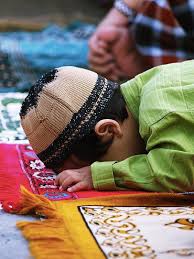
As far as the sphere of Shari'ah's influence is concerned, it is all
encompassing. It has laid bare all the beneficial and the detrimental
things of this world and the hereafter. There is not a single facet of
life which the Qur'an and Sunnah has not explained in detail or at least
in principal. whether it is cardinal beliefs or devotions, inter-related
dealings, social life or moral character, Islam fully embraces these
five branches. The pages of the Qur'an and Hadith are replete with
their teachings.
However, it is not possible to instruct young children or beginners
in the details of these teachings. In fact, it is not even appropriate
to teach them all the details at the beginning of their Qur'anic lessons.
Therefore, my humble opinion is that instead of going into lengthy
discussions, every mother should focus her attention mainly on
three things during the early stages of the child's life. Together with
their Quran'ic lessons, emphasise these three points and cultivate
them within the children. Pinning our expectations on the mercy of
Allah Ta'ala, we hope that even if you are particular about these three
basic fundamentals only, their lives will undergo a remarkable imani
influence. This in turn will simplify practicing on the other branches
of din, InshaAllah.
The three fundamentals are :
# Devotion to fard salaah
# Total abstention from lies
# The habit of serving others
(1) Devotion to the Fard Salah
Who does not know that salaah is the basic fundamental of Islam and
that it is the most important obligation from amongst all the other
obligations? The Noble Qur'an is explicit in its declaration : ''Verily
salaah prevents shamelessness and vileness.''
Therefore, when the child, boy or girl, reaches the age of seven, be very
vigilant and ensure that they are performing their obligatory salaah. Girls
are required to perform their salaah at home whilst boys and men are
commanded to perform their salaah with the congregation. So every child
should be practically instructed about the performance of salaah. They
should be taught the surahs and other du'as of salaah. Keep a watchful eye
on them and make sure they are performing their fard salaah. Do not be
lenient in any aspect of salaah. If a child is not punctual with salaah with
jam'at (congregation), then somehow or the other get him to perform his
salaah consistently with the jam'at.
The best and most tried and tested remedy to achieve this goal is to engage
in t'alim (i.e. daily recital before all family members) of the book compiled
by Sheikhul-Hadith Hadrat Maulana Zakariyya Sahib entitled 'Fadail-e-Salaah'.
From the age of seven, ask the children to write and then memorize these
Ahadith. You may also make them compete with one another in their leisure
time. For example, you may challenge them to write out ten Ahadith and then
twenty and then thirty and so forth. Also, there are forty Ahadith on page 20.
Make your children memorize them and periodically all of you should sit
together and listen to one of them reciting these Ahadith from memory.
Reward the child who memorizes all forty Ahadith.
(2) Total abstention from lies
The second important factor is to cultivate the habit of speaking the truth at
all times and at all costs do not ever tolerate any form of falsehood.
Lying is not only a major sin but it is also a root of other evils. It is a cause
for a number of other sins. So cultivate abhorrence for lies within the children.
Develop the habit of speaking the truth at all times and ensure that they refrain
from falsehood. This will ensure that they automatically abstain from a number
of other sins as well. This is why Rasulullahصلى الله عليه وسلم declared: ''Refrain
from lies as lies leads to immorality and immorality paves the way to Hell.''
It is also for this reason that Rasulullahصلى الله عليه وسلم declared lies to be
diametrically opposed to Imaan (belief).
Imam Malikرحمة الله عليه mentions a Hadith: ''Rasulullahصلى الله عليه وسلم was
once asked : ''Can a believer be cowardly?'' He replied: ''Yes, he can be
cowardly.'' He was again asked: ''Can a believer be miserly?'' He replied:
''Yes, he can be miserly.'' Rasulullahصلى الله عليه وسلم was asked once again:
''Can a believer be a liar?'' He replied: ''No, a believer cannot be a liar!''
Hence, in order to make them perfect Muslims, children should be stead-
fastly restrained from all forms of falsehood. On no account should you
yield to any form of their lies. After being found guilty of any misdemeanour,
if the child speaks the truth, whilst considering the circumstances, be a bit
lenient with him when admonishing him or forgive him altogether. However,
if he compounds his misdemeanour with lies, do not be lenient in disciplining
him. In this aspect, the parents as well as the teachers should be fully aware of
their responsibilities.
continued in another post inshaAllah
Ideal Mother
by Moulana Muhammad Hanif 'Abdul Majid
In the Name of Allah,
the Most Gracious,the Most Merciful.
As far as the sphere of Shari'ah's influence is concerned, it is all
encompassing. It has laid bare all the beneficial and the detrimental
things of this world and the hereafter. There is not a single facet of
life which the Qur'an and Sunnah has not explained in detail or at least
in principal. whether it is cardinal beliefs or devotions, inter-related
dealings, social life or moral character, Islam fully embraces these
five branches. The pages of the Qur'an and Hadith are replete with
their teachings.
However, it is not possible to instruct young children or beginners
in the details of these teachings. In fact, it is not even appropriate
to teach them all the details at the beginning of their Qur'anic lessons.
Therefore, my humble opinion is that instead of going into lengthy
discussions, every mother should focus her attention mainly on
three things during the early stages of the child's life. Together with
their Quran'ic lessons, emphasise these three points and cultivate
them within the children. Pinning our expectations on the mercy of
Allah Ta'ala, we hope that even if you are particular about these three
basic fundamentals only, their lives will undergo a remarkable imani
influence. This in turn will simplify practicing on the other branches
of din, InshaAllah.
The three fundamentals are :
# Devotion to fard salaah
# Total abstention from lies
# The habit of serving others
(1) Devotion to the Fard Salah
Who does not know that salaah is the basic fundamental of Islam and
that it is the most important obligation from amongst all the other
obligations? The Noble Qur'an is explicit in its declaration : ''Verily
salaah prevents shamelessness and vileness.''
Therefore, when the child, boy or girl, reaches the age of seven, be very
vigilant and ensure that they are performing their obligatory salaah. Girls
are required to perform their salaah at home whilst boys and men are
commanded to perform their salaah with the congregation. So every child
should be practically instructed about the performance of salaah. They
should be taught the surahs and other du'as of salaah. Keep a watchful eye
on them and make sure they are performing their fard salaah. Do not be
lenient in any aspect of salaah. If a child is not punctual with salaah with
jam'at (congregation), then somehow or the other get him to perform his
salaah consistently with the jam'at.
The best and most tried and tested remedy to achieve this goal is to engage
in t'alim (i.e. daily recital before all family members) of the book compiled
by Sheikhul-Hadith Hadrat Maulana Zakariyya Sahib entitled 'Fadail-e-Salaah'.
From the age of seven, ask the children to write and then memorize these
Ahadith. You may also make them compete with one another in their leisure
time. For example, you may challenge them to write out ten Ahadith and then
twenty and then thirty and so forth. Also, there are forty Ahadith on page 20.
Make your children memorize them and periodically all of you should sit
together and listen to one of them reciting these Ahadith from memory.
Reward the child who memorizes all forty Ahadith.
(2) Total abstention from lies
The second important factor is to cultivate the habit of speaking the truth at
all times and at all costs do not ever tolerate any form of falsehood.
Lying is not only a major sin but it is also a root of other evils. It is a cause
for a number of other sins. So cultivate abhorrence for lies within the children.
Develop the habit of speaking the truth at all times and ensure that they refrain
from falsehood. This will ensure that they automatically abstain from a number
of other sins as well. This is why Rasulullahصلى الله عليه وسلم declared: ''Refrain
from lies as lies leads to immorality and immorality paves the way to Hell.''
It is also for this reason that Rasulullahصلى الله عليه وسلم declared lies to be
diametrically opposed to Imaan (belief).
Imam Malikرحمة الله عليه mentions a Hadith: ''Rasulullahصلى الله عليه وسلم was
once asked : ''Can a believer be cowardly?'' He replied: ''Yes, he can be
cowardly.'' He was again asked: ''Can a believer be miserly?'' He replied:
''Yes, he can be miserly.'' Rasulullahصلى الله عليه وسلم was asked once again:
''Can a believer be a liar?'' He replied: ''No, a believer cannot be a liar!''
Hence, in order to make them perfect Muslims, children should be stead-
fastly restrained from all forms of falsehood. On no account should you
yield to any form of their lies. After being found guilty of any misdemeanour,
if the child speaks the truth, whilst considering the circumstances, be a bit
lenient with him when admonishing him or forgive him altogether. However,
if he compounds his misdemeanour with lies, do not be lenient in disciplining
him. In this aspect, the parents as well as the teachers should be fully aware of
their responsibilities.
continued in another post inshaAllah
Ideal Mother
by Moulana Muhammad Hanif 'Abdul Majid
Saturday, March 2, 2013
Naseehat by Maulana Tariq Jameel
Few very beautiful(advices) naseehat by Maulana Tariq Jameel with English
subtitles. For more of Maulana's bayans with English Sub click here
Tuesday, February 12, 2013
Subscribe to:
Posts (Atom)